
Blog
Water Purifier: The Complete Guide to Choosing the Right Water Purifier for Your Home

Introduction
Water is one of the most essential elements for a healthy life, but not all water is safe to drink. Contaminants such as bacteria, viruses, heavy metals, pesticides, excess salts, and dissolved impurities can make water unsafe and lead to serious health issues. A reliable water purifier ensures that every glass of water your family drinks is clean, safe, and healthy.
Modern water purifiers use advanced purification technologies like RO (Reverse Osmosis), UV (Ultraviolet), UF (Ultrafiltration), and TDS controllers to remove harmful contaminants while retaining essential minerals. Whether you live in a city apartment or a rural home, investing in the right water purifier is one of the best decisions for your family’s health.
What is a Water Purifier?
A water purifier is an appliance designed to remove harmful impurities, microorganisms, chemicals, and dissolved solids from water, making it safe for drinking and cooking.
Unlike traditional filtration methods, modern water purifiers use multiple purification stages to eliminate contaminants while improving the taste, odor, and overall quality of water.
Why Every Home Needs a Water Purifier
Safe drinking water is the foundation of good health. Here are some of the major benefits of installing a water purifier:
Protects Your Family’s Health
Purified water helps prevent waterborne diseases such as typhoid, cholera, dysentery, diarrhea, and hepatitis.
Removes Harmful Contaminants
Advanced purification technologies eliminate bacteria, viruses, heavy metals, pesticides, chlorine, and harmful chemicals.
Improves Taste and Odor
A water purifier removes unpleasant smells and bad taste caused by chlorine and impurities.
Preserves Essential Minerals
Modern purifiers with mineral retention technology maintain essential minerals like calcium and magnesium for healthier drinking water.
Convenient Access to Clean Water
Enjoy purified drinking water instantly without relying on bottled water.
How Does a Water Purifier Work?
A modern water purifier follows a multi-stage purification process.
- Sediment Filter removes dust, sand, rust, and suspended particles.
- Activated Carbon Filter absorbs chlorine, bad odor, pesticides, and organic chemicals.
- RO Membrane removes dissolved salts, heavy metals, fluoride, arsenic, and harmful impurities.
- UV Chamber destroys bacteria and viruses using ultraviolet light.
- UF Membrane provides additional protection by removing microscopic particles.
- Mineral Cartridge restores essential minerals and enhances the taste of water.
The result is clean, healthy, and great-tasting drinking water.
Types of Water Purifiers
RO (Reverse Osmosis) Water Purifier
RO technology forces water through a semi-permeable membrane that removes dissolved impurities and harmful contaminants.
Best For
- Borewell water
- High TDS water
- Hard water
- Municipal water with high contamination
Advantages
- Removes heavy metals
- Removes excess salts
- Eliminates fluoride and arsenic
- Produces highly purified water
UV Water Purifier
UV technology uses ultraviolet rays to kill bacteria, viruses, and microorganisms.
Best For
- Municipal water
- Low TDS water
- Soft water
Advantages
- Chemical-free purification
- Fast purification
- Kills harmful microbes effectively
UF (Ultrafiltration) Water Purifier
UF purification removes suspended particles and microorganisms without electricity.
Best For
- Low TDS water
- Areas with frequent power cuts
Advantages
- Low maintenance
- No electricity required
- Affordable option
RO + UV + UF Water Purifier
This is the most advanced and widely recommended purification system.
Benefits
- Multi-stage purification
- Removes dissolved impurities
- Kills bacteria and viruses
- Improves taste
- Suitable for most water sources
Understanding TDS (Total Dissolved Solids)
TDS refers to the amount of dissolved minerals and salts present in water.
Below 150 ppm
Very low mineral content.
150–300 ppm
Excellent drinking water quality.
300–500 ppm
Acceptable for drinking.
Above 500 ppm
Water purification using RO technology is strongly recommended.
Modern water purifiers with TDS controllers ensure the right balance of purity and essential minerals.
Important Features to Look For
Multi-Stage Purification
A purifier with 6 to 10 purification stages provides comprehensive protection against different contaminants.
TDS Controller
Maintains essential minerals while reducing excessive dissolved solids.
Mineral Enhancer
Adds back beneficial minerals that improve taste and support overall health.
UV Sterilization
Provides an additional layer of protection by destroying bacteria and viruses.
Smart LED Display
Premium water purifiers feature digital displays that provide information such as:
- Filter life
- Water quality
- Tank status
- Service alerts
- Purification mode
Large Storage Tank
Storage capacity typically ranges from 7 to 15 liters.
Choose a larger tank for bigger families or areas with frequent power cuts.
Smart Auto Shut-Off
Automatically stops purification when the storage tank is full, saving electricity and extending the life of the purifier.
Types of Installation
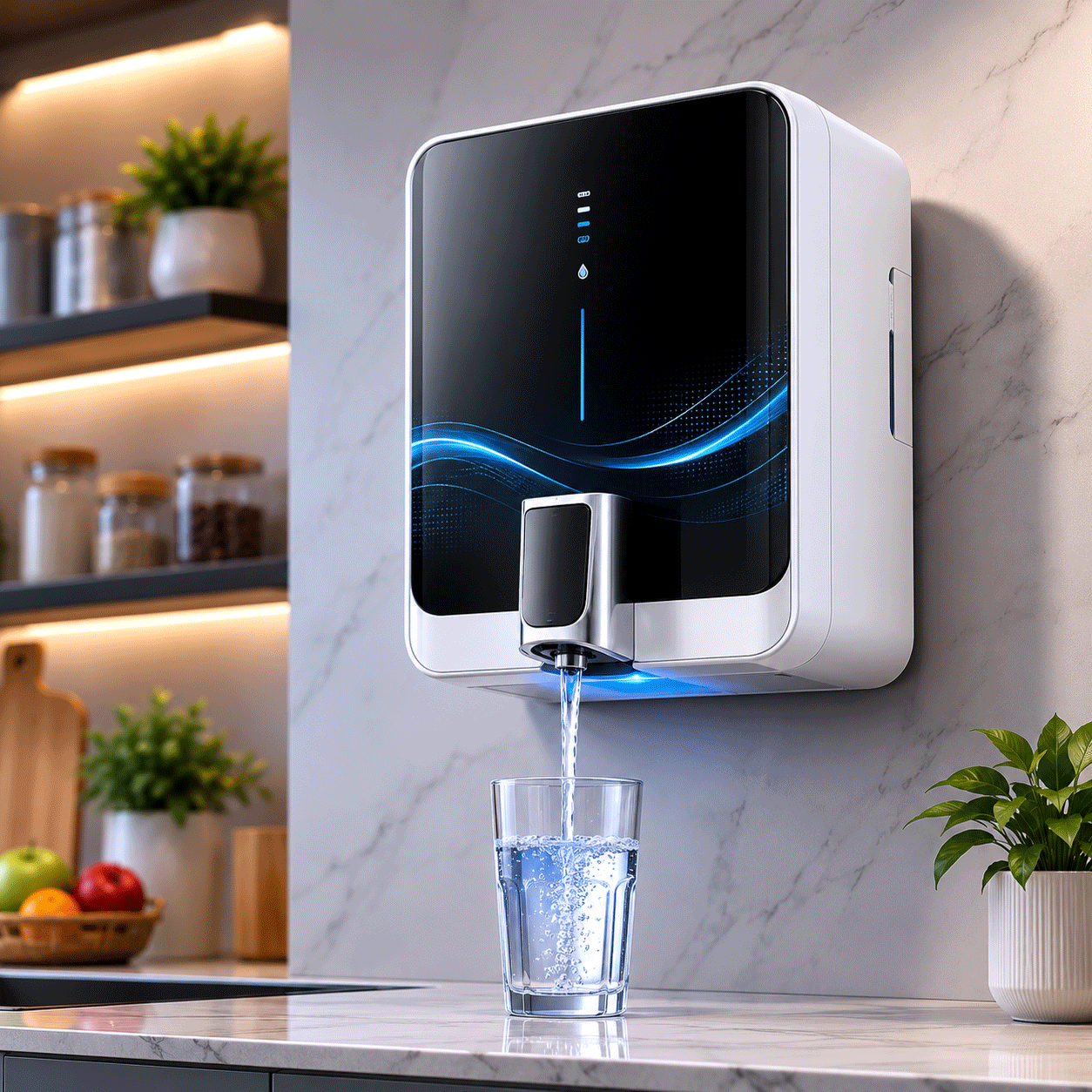
Wall-Mounted Water Purifier
Most popular option for modern kitchens.
Benefits:
- Saves counter space
- Easy access
- Stylish appearance
Countertop Water Purifier
Ideal where wall installation is not possible.
Under-the-Sink Water Purifier
Installed inside the kitchen cabinet for a clean and minimalist look.
Perfect for modular kitchens.
How to Choose the Right Water Purifier
Consider the following before purchasing:
Water Source
- Municipal Supply
- Borewell Water
- Tanker Water
TDS Level
Test your water to determine whether RO purification is required.
Family Size
- 1–3 Members: 7–8 L Storage
- 4–6 Members: 8–10 L Storage
- Large Families: 10–15 L Storage
Daily Water Consumption
Select a purifier that matches your family’s drinking and cooking water needs.
Benefits of a Water Purifier
- Provides safe drinking water
- Removes bacteria and viruses
- Eliminates harmful chemicals
- Removes heavy metals
- Improves taste and odor
- Preserves essential minerals
- Reduces dependency on bottled water
- Supports healthy digestion
- Protects children and elderly family members
- Offers peace of mind every day
Water Purifier Maintenance Tips
To keep your purifier performing efficiently:
- Replace filters as recommended by the manufacturer.
- Clean the storage tank regularly.
- Schedule annual servicing.
- Check the RO membrane periodically.
- Keep the exterior clean using a soft cloth.
- Use only genuine replacement filters.
Regular maintenance improves purification efficiency and extends the lifespan of the appliance.
Common Mistakes to Avoid
- Buying an RO purifier without checking the TDS level.
- Ignoring filter replacement schedules.
- Purchasing an undersized storage tank.
- Delaying annual servicing.
- Using non-genuine replacement filters.
Signs That Your Water Purifier Needs Service
- Slow water flow
- Unpleasant taste or odor
- Water leakage
- Indicator showing filter replacement
- Reduced purification speed
- Unusual operating noise
Timely servicing ensures consistent water quality and protects your family’s health.
Frequently Asked Questions
Which water purifier is best for home use?
A RO + UV + UF water purifier with a TDS controller is ideal for most Indian households, especially where water quality varies.
Is RO water safe for daily drinking?
Yes. Modern RO purifiers with mineral retention technology provide safe drinking water while maintaining essential minerals.
How often should filters be replaced?
Most filters require replacement every 6–12 months, depending on water quality and usage.
Does a water purifier remove bacteria and viruses?
Yes. UV technology destroys bacteria and viruses, while RO and UF remove many harmful contaminants and microorganisms.
Do I need a water purifier if I receive municipal water?
Yes. Municipal water may still contain chlorine, microorganisms, or dissolved impurities. A purifier provides an extra layer of safety.
Conclusion
A water purifier is one of the most important appliances for ensuring your family’s health and well-being. With advanced technologies such as RO, UV, UF, and mineral enhancement, modern purifiers deliver clean, safe, and great-tasting water every day.
Before choosing a water purifier, evaluate your water source, TDS level, family size, storage requirements, and preferred features. Investing in the right purifier not only protects your loved ones from waterborne diseases but also provides long-term convenience, better health, and peace of mind.